Magazine: "Alcyonium verseveldti" a blue soft coral
Magazine
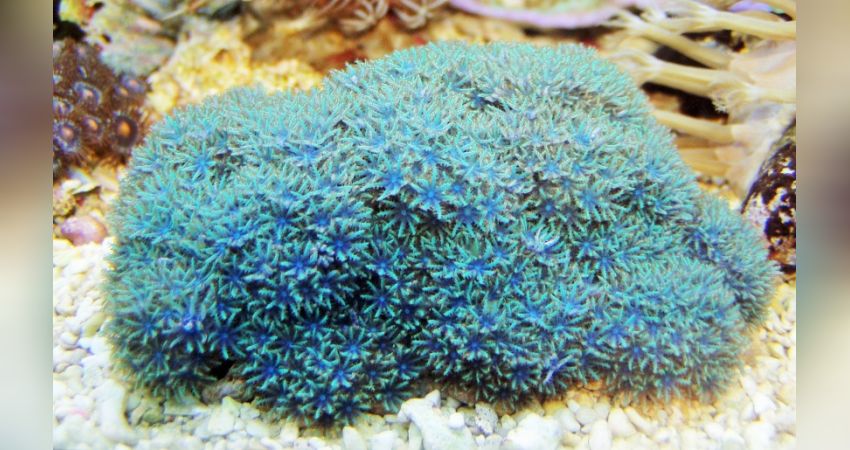
Alcyonium verseveldti unter T5 Röhren im 450 Liter Becken. Foto Paul-Gerhard Rohleder
There are three main reasons why a coral is or can be a rarity in aquariums.The coral has only been known for a short time or is rare in the trade and is therefore not very common. The coral comes from Australia, or is newly introduced and accordingly expensive. The coral is very delicate and is therefore only kept by a few specialists.
"Alcyonium verseveldti" a blue soft coral
.Why a coral is or can be a rarity in aquariums, there can be three main reasons for this.The coral has only been known for a short time or is rare in the trade and consequently still not very common. The coral comes from Australia, or is newly introduced and accordingly expensive. The coral is very delicate and is therefore only maintained by a few specialists.
Certainly the current fashion trends and marine aquaristics could also have similarities. Some fish and corals that were in great demand a few years ago are no longer in such high demand and are becoming shopkeepers. They are as little in demand as the trend from last year or the year before. Breeding of these corals, both leather corals and stony corals, especially some Montipora species, is no longer possible, or only very difficult, because the "trend" has changed. On the other hand, those who breed unusually coloured or even rarely imported corals do not need to worry about the sale of their offspring. However, in the not too distant future, this trend could also be forced to turn into the opposite again.
The range of corals in general, in specialist shops and also from private suppliers, is now very extensive. The marine aquarist, and especially the beginner in this hobby, often finds it quite difficult to decide how to stock his aquarium, especially if he has not yet gained any experience with a coral species. He should and must gain experience in terms of light, current requirements, socialisation with other species and location.
There are enough coral lovers who "covet the rare", as is also known among fish lovers, and sometimes I also count myself among this species. They often spare no price to get what is not commonplace. But I don't count myself among them! And of course the trade, which is always on the lookout for "something new", knows this too. But is this statement true about the search for something new? Already at the beginning of the 90s of the last century, a marine aquarist from my circle of acquaintances, who unfortunately died much too early, told me that there were many more corals or other invertebrates, including fish, unknown to us aquarists but certainly durable, in the reef areas of this island kingdom than were exported.
Accordingly, he said that he had often been on holiday in East Asia, especially in Indonesia, and had also visited export stations there.
Sensibly he once said: " The trade and here especially the exporters always hold back some species in order to offer them in later times, e.g. at relevant fairs, as something "new". I have seen animals in the export stations that have never appeared in our trade. It's like fashion. The market lives from having to offer something rare, something new every now and then in order not to let stagnation arise." So much for his statement.
When I look back today and think about all the "new" things that have been introduced in recent years, he may have been absolutely right in his statement. Just four examples from the last few years: new Acropora sp., Leptastrea sp. the colourful Ultra Zoanthus, the extremely colourful Acanthastrea from the Mussidae family. These corals certainly already existed in the 1990s, but were hardly ever introduced. As a counter-argument, one can certainly cite other reasons such as species protection, immature caging conditions, transport problems, especially with the xeniid family. But there are also reasons such as the great distances to Europe and the protective regulations of the Australian government, which only allowed a limited export of marine animals from this area. Another reason could be the huge market in the USA and Japan, which is or was preferentially supplied with "news". Examples are the colourful Acanthastreas, Montiporas. Rhodactis sp. and Zoanthus which have been sold at horrendous prices in these markets for a very long time before they were offered in Europe.
.Archivbild 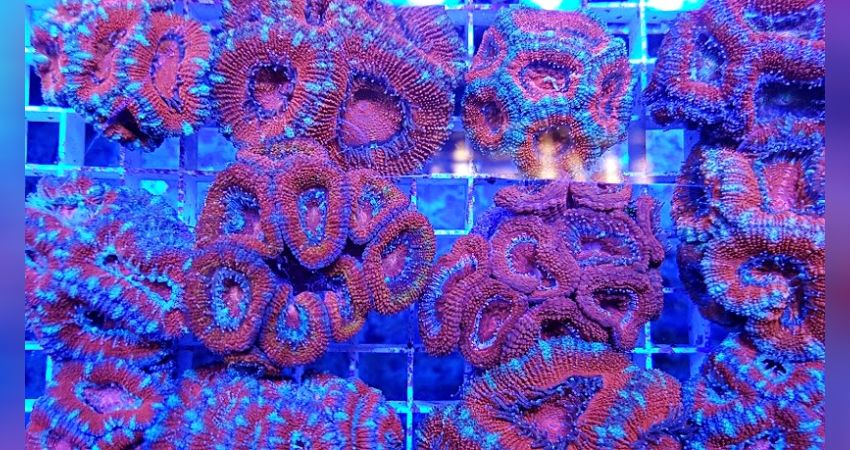
Aufnahme in einem Händlerbecken (Archivaufnahme)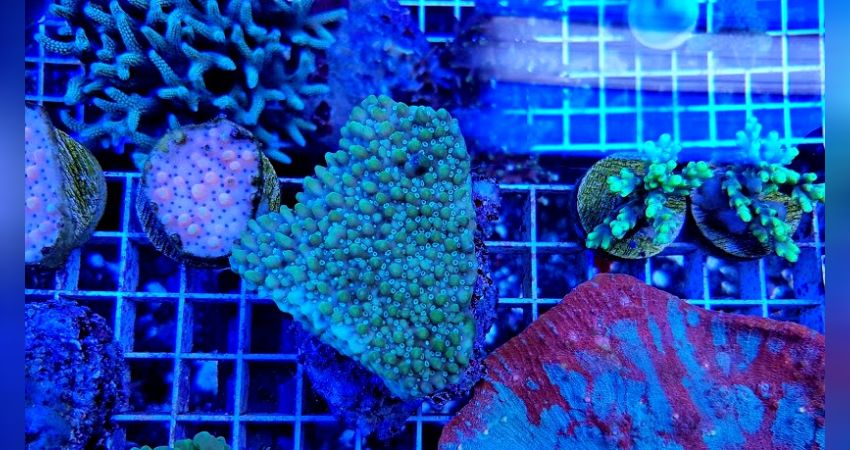
We have learned a lot about the colourful invertebrates that increasingly fascinate marine aquarists in recent decades through reports in magazines, books and the internet. And yet our knowledge in this field is still incomplete. Many systematic questions need answers. Not only the identification of individual species causes problems, but also their classification in the respective genera. It is logical that scientific systematics is now subject to radical changes due to modern DNA analyses, which will also have an effect on marine animals kept in aquaria. In the meantime, we also know that a "huge renaming" is planned for some coral species and will cause some surprises. But this has nothing to do with the "colloquialisation" of scientific terminology that is common among some aquarists. In the "aquaristic vocabulary" we repeatedly come across fantasy names such as Montipora superman, Acropora tricolor, Clavularia tricolor, Zoa spidermann, Rhodactis bounce, etc., to name but a few. For some time now, these trade names have been circulating on the Internet and even in "specialist aquarium shops" and you always get incredulous looks when you say there is no such species. For us hobby aquarists, unfortunately, identifying corals is anything but easy.
diverse Acropora sp. Foto: Paul-Gerhard Rohleder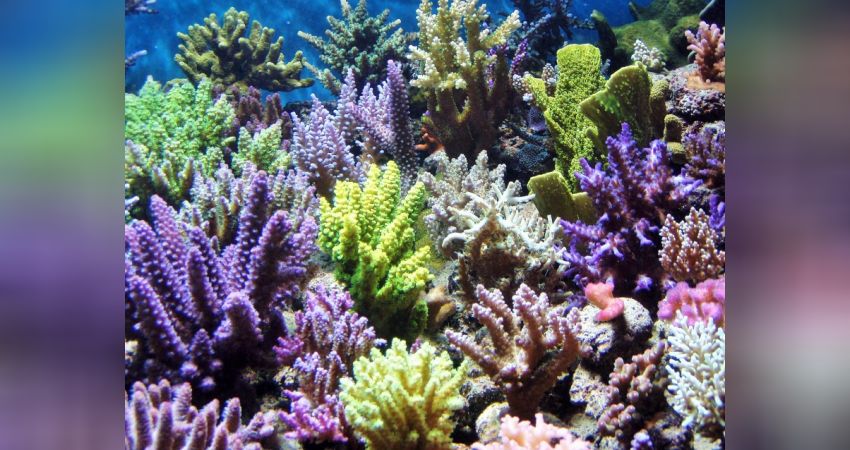
This is why the designation sp. or simply the well-known trade name often has to be used. Systematic questions are also raised by another coral, which is/was also known under the trade name "Sympodium blue". In 1982, however, it was first renamed Metalcyonium verseveldti and later Alcyonium verseveldti. This colourful soft coral, which has been offered for quite some time, is still relatively rarely offered in the pet trade with a few cm² in size, as they are only exported by a few companies from time to time.
At first glance, this coral appears to be a particularly beautiful small Gladiella soft coral. But appearances are deceptive, as it is said to be an Alcyonium, a soft coral species that originates from Bali and is also known from Indonesia. When touched, it closes quickly and then lets parts of its coenenchyma, the body mass, become visible. In layman's terms, the physique and structure is strikingly similar to Gladiella soft corals, but the individual colonies are considerably smaller, often only a few square centimetres in size.
.die Kolonie im 450 Liter Becken geschlossen. Foto: Paul-Gerhard Rohleder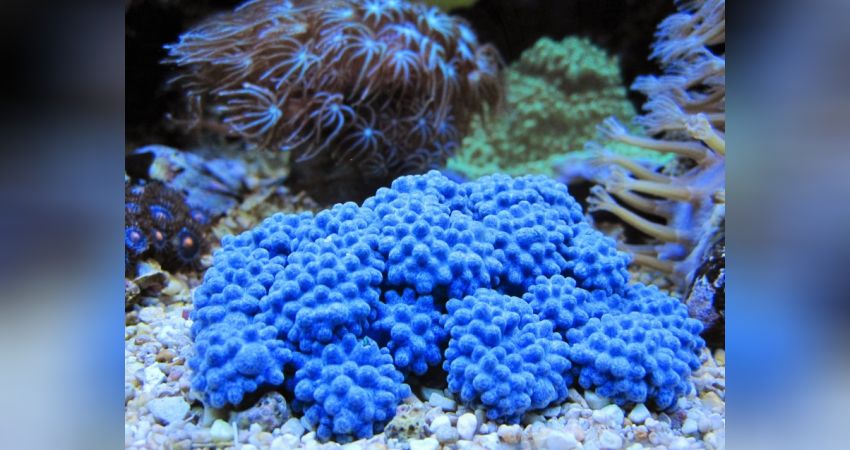
The individual colonies are bushy, often standing very close together, giving the appearance of a larger colony. The individual polyps are very short and the typical eight pinnate tentacles are only about 3-4 mm in diameter and cover the often bluish-white body mass with a dense carpet. Externally, they are hardly distinguishable from the small-polyped blue Xenia Sarcothelia edmondsoni . Only when you lightly touch a colony with your fingers can you tell the difference. This "blue" Alcyonium verseveldti soft coral has a so-called coenenchyma, whereas Sarcothelia edmondsoni has a tubular basal layer but also belongs to the Xeniidae family. The coenenchyma is one of the typical features of the order Alcyonacea, to which the soft corals of the family Xeniidae also belong. It can be mushroom-shaped, tree-branched or even cover the coral rock as a thin crust. If the coenenchyma is missing or replaced by a stolon plexus, one can assume that it is not a soft coral.
.Kolonie Sarcothelia edmondsoni. Foto: Paul-Gerhard Rohleder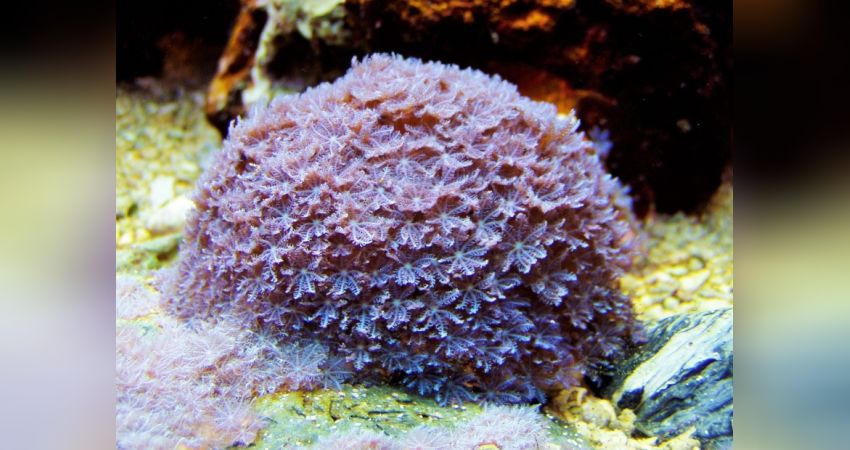
As the Alcyonium verseveldti I bought from a pet shop was quite large with several colonies, I decided to divide it up and settle it in different locations. For the care of the first colonies I had chosen my 300 litre reef tank in which I keep differently coloured Zoanthus crustose anemones and various other corals. Originally, this 300 litre tank was only intended for some so-called secondary colonisers of the coral reef, mainly colourful zoanthus and disc anemones. Secondary colonisers are sessile organisms that settle where the original colonisers have died. Whatever the cause may have been. Originally, the main interest was in the colourful Zoanthus species. Then, however, various Caulastrea species, Goniopora sp, Alveopora tizardi and Alveopora gigas, Acanthastrea, Leptastrea sp. and some Blastomussa sp. were added. But unlike many hard coral enthusiasts at the moment, these corals should by no means be granted the "exclusive privilege" here, and so an attempt was made to also associate a colony of the blue soft coral Alcyonium verseveldti. In the end I decided to distribute the separated colonies to my 160 litre reef tank and 450 litre reef tank (the latter has a life span of over 30 years).
.
Just a few hours later, however, after prior levamisole treatment of the colonies as a preventative against strudel worms and careful re-acclimation using the droplet method, the eight-tentacled polyps opened. As the three acquired colonies were placed in different locations in the three reef tanks for the time being, I noticed interesting colour variations in the polyps a few weeks later:
A colony in the 300 litre tank at a water depth of approx. 20 cm under four T5 tubes a'39 watts (two tubes Reefwhite 15000 K and two blue ones from Aqua medic ) shone in a brown-blue-greenish shade under the following average water values measured over several weeks:
Alkalinity: 6 - 8 dH, Ca: 400 - 420 mg/l, NO3: 0 - 1 mg/l, PO4: 0.03 - 0.09 mg/l
Alcyonium verseveldti im 300 Liter Becken. Foto Paul-Gerhard Rohleder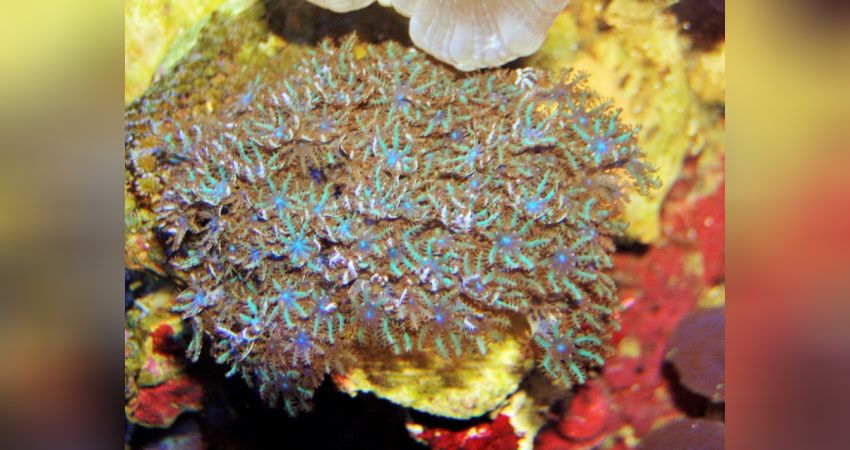
The colony in my 450 litre tank which was placed on the substrate at about 45 cm water depth appeared in a beautiful light bluish hue which particularly appealed to me. This tank is illuminated with five T5 tubes a'54 Watt (three tubes Reefwhite 15000K and two blue ones from Aqua medic).
Alkalinity: 5.5 - 8 dH, Ca: 390 - 420 mg/l, NO3: 0 mg/l, PO4: 0.04 - 0.07 mg/l
Alcyonium verseveldti unter T5 Röhren im 450 Liter Becken. Foto Paul-Gerhard Rohleder
Whereas against the colony in the 160 litre tank showed more greyish-bluish colours near the bottom in about 35 cm water depth. ( Photo) This tank is equipped with an ATI Sunpower 4 x 39 Watt T5 ( two tubes Reefwhite 15000 K and two blue ones from Aqua medic ).
Alkalinity: 6 - 8.5 dH, Ca: 410 - 440 mg/l, NO3: 0 - 1 mg/l, PO4: 0.05 - 0.08 mg/l ( without PO4 absorber)
.Kolonie im 160 Liter Becken. Foto Paul-Gerhard Rohleder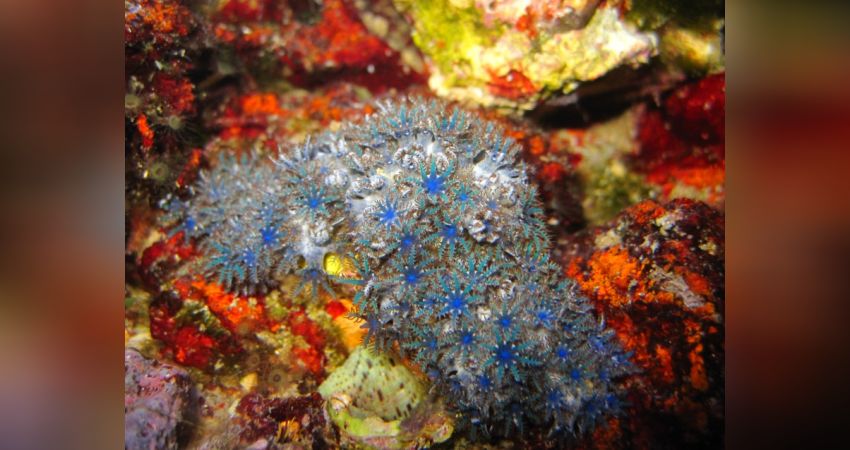
But the external appearance, colony shape and polyp formation was the same in all colonies. Strikingly, this soft coral thrived in my tanks under a wide range of conditions such as stocking and nutrient levels. Apparently, this species can cope very well with different light levels and flow conditions. In scale, the largest colonies of polyps reached an area of only a few square centimetres. Especially when viewed from above, the blue glowing colonies are a magnificent sight in the large reef tank, giving the impression of a wonderfully "large" soft coral. The individual polyps grow only a few millimetres high, with about 3-4 mm on the polyp head. They originate from a bluish-white coloured, about 5-10 mm thick common body mass, the so-called coenenchyma. The individual polyps grow so close together that their bushy eight-tentacled polyps touch each other. They can be completely retracted into the coenenchyma.
Viewing them under higher magnification with a strong magnifying glass or by enlarging a previously taken picture with a good digital camera only reveals the very beautiful colouration and details of the individual polyps.
.Nahaufnahme Polypen. Foto Paul-Gerhard Rohleder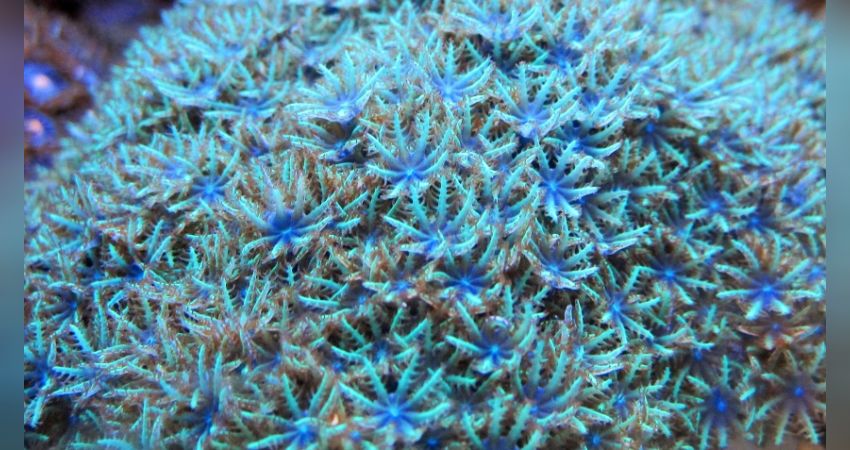
As the colouration and light requirements of the colonies already suggest, a high number of symbiotic algae are found in the tentacles and polyp tissue. Feeding experiments in this context led me to the assumption that we are dealing with a soft coral that is able to feed purely autotrophically, i.e. solely from the metabolism of its symbionts. The autrophic nutrition of the soft coral is supported above all by its behaviour when fed with the finest plankton food. I have never been able to detect it feeding. The polyps did not react to feeding even the smallest substitute plankton. It is certainly the case that this soft coral, like the similar-looking blue Xenia Sarcothelia edmondsoni mentioned above, absorbs some dissolved substances from the water, such as nitrates and amino acids, via its body surface. However, it probably lives mainly from the metabolic products of its symbiotic partners, the zooxanthellae. In order to secure this food source, the lighting must be sufficiently strong so that the symbiotic algae can feed their host the coral via photosynthesis ( slightly blue-heavy).
.It would/is certainly useful to occasionally add amino acids and liquid feeds from various manufacturers/providers so that the corals can/should absorb certain substances via the surface of their bodies. For me as a user of these commercially available products, however, the same question always arises: "What is in it and how can I actually recognise a good product? Are the expensive products better than the cheaper ones? Even though I have tried a wide variety of products in this regard, I have never been able to detect a significant difference in the appearance of my corals. I am now firmly convinced that nothing is better for our reef tank than a regular water change with sea salts from the well-known brands. If you discuss coral feeding with other marine aquarists, you will soon find out that some aquarists feed their LPS corals, while others do not, but that in both cases the corals grow equally well, provided the light and water conditions are good. Whatever the case, if you decide to use supplementary feeding, it is best to feed a fine, particulate coral food occasionally rather than daily, if possible after the main lighting has been switched off. Even if our corals only use 1% of this food, it still benefits the microfauna of the tank, which in turn benefits our corals.
. 450 Liter Becken. Foto Paul-Gerhard Rohleder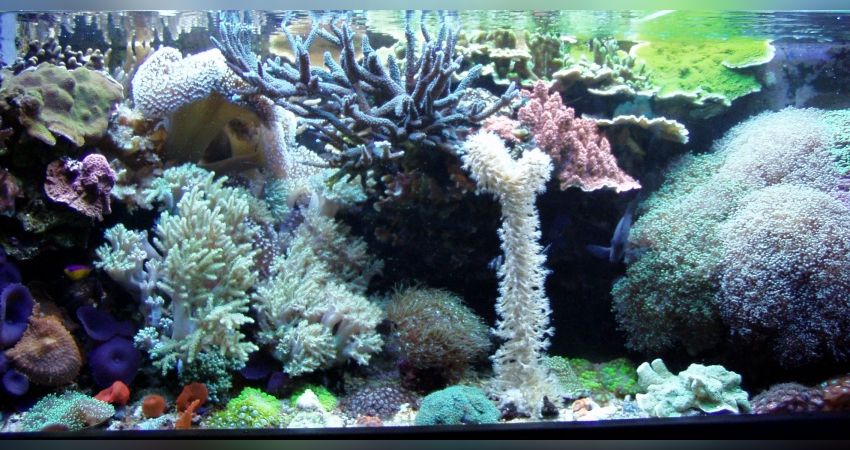
I regularly add calcium ions to the aquarium system simply by changing the water in the 160-litre, 300-litre and 450-litre tanks regularly by 10-20 litres per week, in which this soft coral is also kept with various hard corals. As this is by far not sufficient for this tank with its calcium-consuming inhabitants, I have to resort to another method to supply this calcium regularly. I use the now well-known Balling method. Here, calcium chloride and sodium hydrogen carbonate are added separately in a certain ratio. This reaction produces calcium hydrogen carbonate and, as a by-product, common salt. To prevent the common salt from accumulating in the seawater and shifting its ionic balance, a precisely defined amount of mineral salt is regularly added to the aquarium water. I have been using this method very successfully for many years in all three of my seawater tanks and do not need to install any additional equipment (calcium reactor, etc.). However, in order to avoid or at least minimise errors, the balling method must be used very conscientiously. I add the trace elements suitable for this system via solutions with this balling method, which I buy from Aquafair. A few months ago I started adding amino acids daily - in case I forget - shortly before the main light goes out. At the moment I use amino acids from Dupla, which were recommended to me by H. Gerhardus, the owner of the pet shop "Fishandmore". I believe or imagine that I have noticed a stronger colour development of the yellow Sarcophyton elegans but certainly of the blue colours in the disc anemones. However, it may also be due to the fact that I have increased the potassium content from 330/340 mg/l to approx. 380/390 mg/l instead of 330/340 mg/l in the past. My water values are regularly checked with Salifert tests, which I believe are sufficiently accurate for my requirements. However, these tests are regularly checked with so-called reference solutions, e.g. from Gilbers, Aquafair. At this point I would also like to mention that e.g. the PO4 value - measured with Salifert - almost always has to be multiplied by a factor of 3-4 if it has been measured against with the photometer from Hanna. e.g. Salifert measured 0.01mg/l, against measured with Hannameter 0.04 mg/l. I think the values determined with the Hanna photometer are more realistic.
300Liter Becken. Foto Paul-Gerhard Rohleder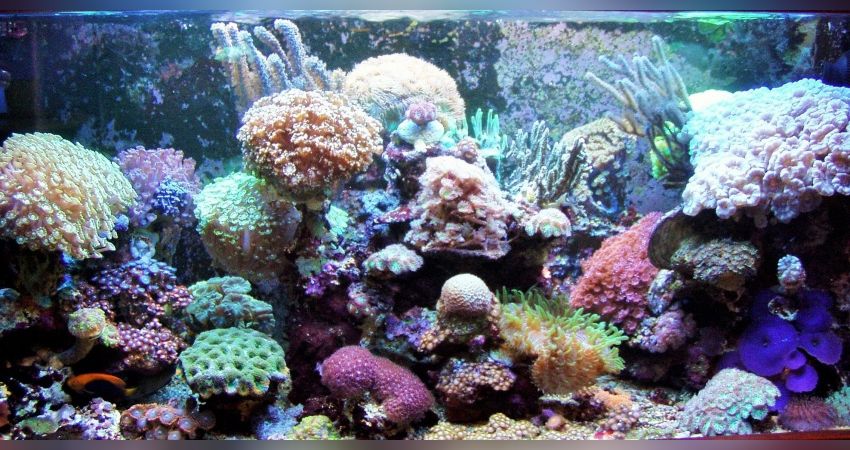
The phosphate content should not exceed 0.12 milligrams per litre. To keep it as low as possible, it is often necessary to use a phosphate adsorber (I am currently still using Gilbers Diakat B 2-4 mm on an iron hydroxide basis). Working hand in hand with it are powerful skimmers that remove dissolved, colloidal and fine-particulate organic waste from the water before it releases phosphate through microbial degradation. With such water treatment methods, however, a very nutrient-poor environment can only be maintained if one does not overdo it with the fish stocking. Experience has shown that long-term successful keeping of these delicate flower animals, which are not sensitive in themselves, is hardly possible in aquariums with a high fish population. An Alcyonium versveldti colony, for example, lives together with twelve small fish in the 160-litre tank. The fish are two damselfishes each Chrysiptera hemicyanea, Elacatinus macrodon, Elacatinus multifasciatum, fire sword gobies Nemateleotris magnifica as well as dwarf gobies of the species Trimma cana, Priolepis nocturna a Koumansetta hectori goby that is used for "tilling the bottom" as well as for destroying microalgae deposits on the decoration.
.160 Liter Becken. Foto Paul-Gerhard Rohleder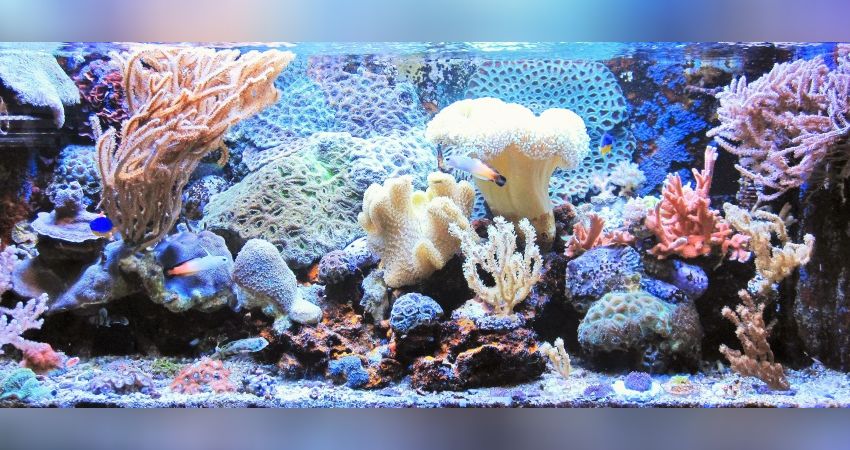
The Alcyonium verseveldti soft coral should be, or most likely is, an enduring keeper when adapted to aquarium conditions. In addition, this blue soft coral is characterised by magnificent colouration. To thrive, however, they need clear and clean, nutrient-poor water as well as a location with a light current and not too bright lighting. Their location should be chosen in such a way that they are not overshadowed by other sessile invertebrates in terms of flow and lighting over time.
In principle, the same keeping conditions apply to the care of these soft corals as to other soft corals. However, they seem to not like "harsh" lighting, high nutrient levels and strong water movement. And under conditions that suit it, its colonies should usually also grow by increasing the body mass and then cutting off/dividing parts of the coenenchyma. Sexual reproduction in reef aquaria has been observed more frequently in Sarcothelia edmondsoni soft corals, with which Alcyonium verseveldti can be very easily confused.
.Kolonie Sarcothelia edmondsoni. Foto: Paul-Gerhard Rohleder
To this end, the xenia eject a few bundles of pink larvae, which apparently attach themselves very quickly to the existing stone superstructure without passing through a free-swimming planula stage.
My initial assumption that this acquired as a " Sympodium" would be difficult or impossible to keep in reef aquariums has not been confirmed. Exactly the opposite is the case. This blue soft coral does not grow as fast as some other members of the soft coral family. For my understanding of growth, I have to say that it grows extremely slowly in my aquarium. It would therefore be an ideal keeper for smaller aquariums and " colour" it has as well. Aquarium-grown offspring should certainly find buyers, unlike some other soft corals.
Through my attempts to find a suitable location in three different reef tanks, I have found that the Alcyonium verseveldti soft coral mixes well with all other corals. The presence of tube corals, soft corals, stony corals and even disc anemones and Zoanthus crustose anemones do not seem to bother them. In summary, I would like to state: this blue soft coral can also be maintained very well under the current conditions of reef aquaristics. It requires no more care than other coral species and is particularly suitable for "small aquariums" due to its low body mass.
Text and photos:
Paul-Gerhard Rohleder
June 2018
How do you like this article?
Info
Author

Bookmark
Comments
Topics
Similar articles
- Vermehrungsstrategien von Pilzkorallen - Fungia sp.
- Maxspect TrueReef Filter Lens für IPhones - Gouda Cheese
- Einführung in die Nährstoffversorgung in Riffaquarien
- Octocorallia - Achtstrahlige Korallen - Teil 2
- Korallenzucht im „Miniriff“
- Tropic Marin® Phos-Start & Tropic Marin® Phos-Feed
- NEU von Fauna Marin: SeaTak-Korallenkleber
- Acanthastreas, Micromussa, change in names and new species introduced
- Das Kleben von Gorgonien und Steinkorallen.
- Acropora Strudelwürmer ade?
Comments To the top
Please register
In order to be able to write something yourself, you must register in advance.