




Sunscreen – a threat to coral reefs?
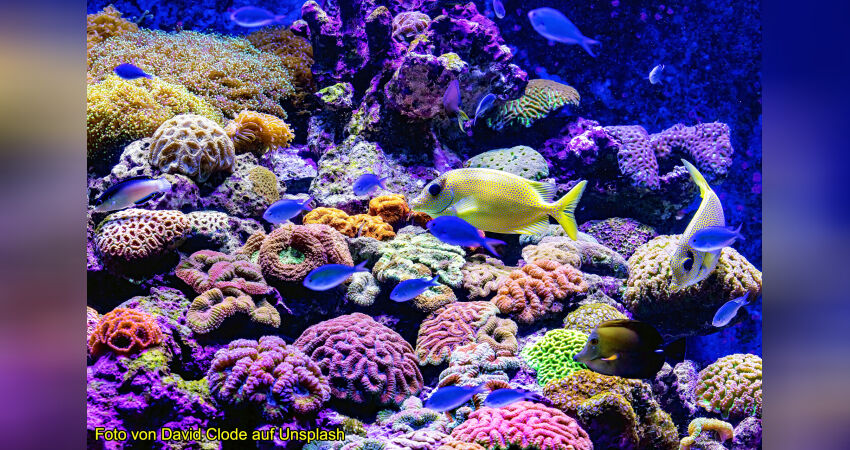
If you don’t want to miss out on sunbathing, you should protect yourself from harmful UV rays and apply sunscreen to your skin as carefully as possible. However, protecting your skin from the sun’s rays also has its pitfalls. Unfortunately, a significant portion of the sunscreen products available still contain questionable organic chemical UV filters such as oxybenzone and octocrylene—a coral killer!
Sunscreen – the coral killer?
If you don’t want to give up sunbathing, you should still protect yourself from harmful UV radiation and apply sunscreen to your skin as carefully as possible. The intensity of UV radiation has increased by about 10% over the past 30 years, meaning that increasingly harmful UVB rays are reaching the Earth’s surface. Reasons for this include changes in the ozone layer as well as the decrease in aerosols—and thus in clouds—due to less particulate matter in the atmosphere. But let’s just mention that in passing here.
Protecting the skin from sunlight, however, also has its pitfalls.
Unfortunately, a significant portion of the skin protection products available still contain questionable organic chemical UV filters such as oxybenzone and octocrylene. Over time—especially during prolonged storage—octocrylene breaks down into benzophenone, a substance that is potentially carcinogenic.
In addition, other chemical UV filters are used, but their effects on health and the environment have not yet been sufficiently researched. One of the newer substances is diethylamino hydroxybenzoyl hexyl benzoate (DHHB). However, DHHB may contain the plasticizer di-n-hexyl phthalate (DnHexP), which has been listed by the EU as a substance of very high concern due to its endocrine-disrupting properties.
These explanations are provided upfront because they are important for understanding the context of an issue that, unfortunately, is not sufficiently publicized.
The potential risks that sunscreens pose to the human body are occasionally discussed in the media. Environmental damage caused by these cosmetics, however, is unfortunately not mentioned at all or only in passing. Organic-chemical UV-protective ingredients are still found in many sunscreens and pose a significant threat to the environment. When swimming, these sunscreens enter the water along with a body freshly coated in cream, where they can then cause significant damage.
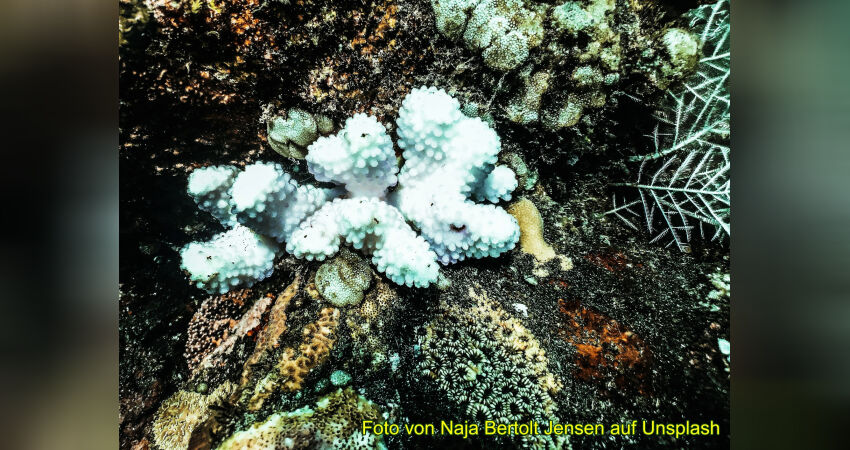
This problem has been known for quite some time and was already published by scientists at the University of Ancona in 2008. At that time, however, it was publicly dismissed in writing by the IKW—Industrial Association for Personal Care and Detergents—on the grounds that “… these findings and measurement results originate from laboratory tests and do not constitute evidence of actual damage to the aquatic environment. Thus, it is highly questionable whether corals in natural reefs are exposed to similarly high concentrations of sunscreen as in the researchers’ experimental setups.” The IKW holds only climate change and fishing responsible for the damage to coral reefs. Since then, however, concentrations ranging from a few nanograms (ng/L) to several micrograms (µg/L), and even milligrams (mg/L) per liter of seawater have been increasingly measured (depending on bathing activity).
In addition, significant damage has been increasingly documented, particularly in coastal coral reefs. For example, concentrations of oxybenzone of up to 1.4 milligrams per liter (mg/L or ppm) have been measured in Hawaii and the Caribbean. These organic chemical UV filters disrupt the symbiosis between zooxanthellae (single-celled algae that supply the coral with nutrients through photosynthesis) and corals. This leads to a form of coral bleaching. Even before 2010, tests in Mexico, Indonesia, Thailand, and Egypt showed that after 18 to 48 hours of contact with small amounts of octocrylene (10 microliters per liter of seawater), significant quantities of zooxanthellae were expelled, and after 96 hours, coral bleaching was fully evident.
It was also observed—as a previously unknown phenomenon—that the concentration of viruses in the surrounding seawater increased by up to 15 times.
It is therefore assumed that corals also shed these viruses. This can lead to latent viral infections, which are promoted by the use of these sunscreens.
Subsequent studies have also shown that not only corals but also zooxanthellae-bearing anemones can be similarly harmed by oxybenzone and octocrylene. Octocrylene, which is still found in many sunscreens, is known to break down into benzophenone under UV radiation, thereby intensifying its toxic effects. (1)
Studies estimate that approximately 14,000 tons of sunscreen enter the oceans annually. Other sources cite an input of 20,000 tons into the northern Mediterranean alone.
In the water, the organic chemical ingredients in sunscreens harm not only corals and anemones but also other marine life. In particular, these substances can cause DNA damage in animals at the larval stage (even in fish and crustaceans), which negatively impacts growth and the ability to reproduce.
However, other ingredients can also cause the death of coral reefs. These include microplastics, which are used as binders, fillers, and film-forming agents and can cause particularly severe damage to or even kill mature corals. (2)
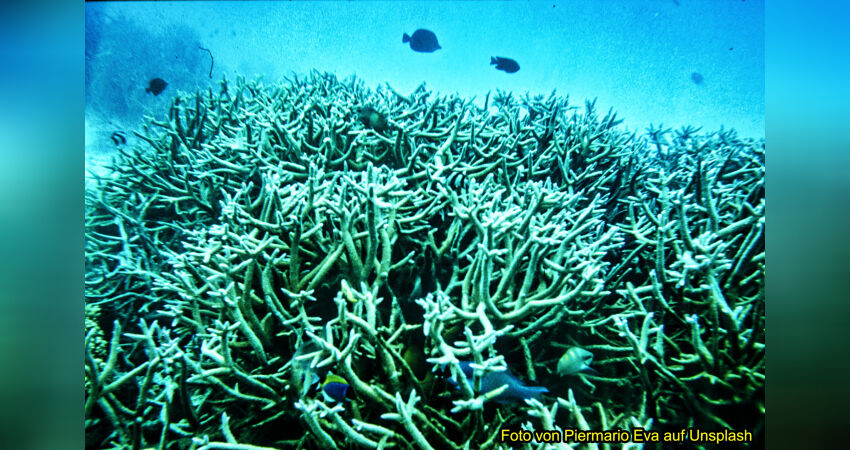
In some regions, sunscreens containing these organic chemical ingredients are already banned.
These include: Hawaii, Palau, Thailand’s national parks, the U.S. Virgin Islands, Bonaire, Aruba, certain regions in Mexico, and Key West in Florida.(3)
Critically high levels of octocrylene have also been detected in German waters, including inland lakes. These are attributable to beachgoers, but also to runoff from rivers.
Amid all these issues, global warming must not be overlooked, as studies have shown that rising temperatures significantly amplify the toxic effects of the substances listed above.
Mineral UV protection is recommended as an alternative to chemical UV protection. The safety of mineral sunscreen is consistently emphasized, provided the filters do not contain nanoparticles (particles between 1 and 100 nanometers). Unlike organic chemical substances, which convert UV radiation into heat, mineral filters create a “protective shield” on the skin that reflects and scatters UV radiation. These filters typically consist of titanium or zinc oxide. Titanium dioxide, however, is controversial in the food industry. (4)
Clothing that protects against UV radiation, on the other hand, is harmless.
Each individual can contribute to protecting the environment—and in this specific case, coral reefs and other marine life—through their behavior. It is important to carefully check the labels of sunscreen products for harmful ingredients.(5)
The product should also be applied at least 20 to 30 minutes before swimming so that it can be absorbed properly. It is also important to know that frequent reapplication only helps to a limited extent. Even those who choose a specific sun protection factor appropriate for their skin type cannot expose themselves to the sun indefinitely. Once the tolerable daily dose of UV rays has been reached, sunbathing should be stopped immediately.
The cosmetics industry has a responsibility to offer toxin-free products at reasonable prices. Consumers should influence this by purchasing the right sunscreen products.
One final remark. The problem outlined here is at least sufficiently known to those responsible, but it receives far too little public attention.
While the harmful effects of chemical sunscreens on the human body are occasionally discussed in the media, the damage to the environment unfortunately does not receive the urgently needed attention—and who goes looking for problems voluntarily?
Thomas Leithold, S&L Naturverlag, March 20, 2026
Sources via Google:
(1) See (EU-funded study under the 6th Framework Programme (FP6), financed by the projects CORALZOO (“The development of an SME-friendly European breeding programme for hard corals”) and REEFRES (“Developing ubiquitous restoration practices for Indo-Pacific reefs”) 8/2009)
(2) See Good News Magazine, Sarah Hangauer /August 20, 2021/ Climate
(3)See German Marine Conservation Foundation (https://www.stiftung-meeresschutz.org/themen/meeresverschmutzung/was-ist-korallenfreundlicher-sonnenschutz/)
(4)The EFSA—European Food Safety Authority—updated its safety assessment of the food additive titanium dioxide (E 171) in March 2020 at the request of the European Commission.
(5) Possible help:ToxFoxApp, free of charge, recommended by BUND
How do you like this article?
Info
Author

Bookmark
Comments
Topics
Similar articles
- Fish Reptile: At TransMarine, Riffkeramik.de and the interview with Blumentier Aquaristik
- NEW - 4in1 ARKA myAQUA® pH/TDS/EC meter incl. thermometer
- Die neue D-D Multifunktions-Pumpe "Funktion"
- Interesting tips on video channels for our hobby
- On the journey: the LPS temple Meerwasser Böttcher near Cologne
- Interzoo 2022: ITC shows a PAR meter called PARwise for about 200 EUR and good news for all Reef Delete owners
- Interzoo 2022: Tobias Neyer aka Seafriendly Reef brings Floating Reef Rocks
- Coral bleaching, are all our coral reefs inevitably dying?
- Merry Christmas
- Presentation: The Glamorca Roller clean 100 and 200 from Tropic creations

Comments To the top
Please register
In order to be able to write something yourself, you must register in advance.